YouTube Videos Blog Photo Gallery
|
 Blog
for 5 January 2009 Fundamentals of Piano
Technique
Many people ask
me for the “secret” to acquiring good technique.
Unfortunately, there is no “secret.” Technique can
only be attained through hard work. Sorry. Every
professional pianist also needs to be able to
improvise. Again, I am frequently asked for the
“secret” to improvisation. In fact, I have often been
hired by other musicians to teach them how to
improvise. They invariably hope that, in one easy
lesson, I can impart to them the great secret that has
somehow eluded them. Almost always, they are deeply
disappointed when I inform them of the hard fact that
the ability to improvise is the result of hard work,
discipline, diligence, and determination. It seems
that no one wants to be told that the key to
improvisation is a thorough grounding in, intimate
familiarity with, and capability to execute flawlessly
all scales, arpeggios, and chords in all inversions.
Far too many would-be jazz, ragtime, and popular
pianists turned away from classical piano lessons
because they vainly and wrongly assumed that jazz and
ragtime would provide a refuge from the hard work of
learning scales and arpeggios. All pianists, regardless of the genre of music they play, must know and will benefit greatly from knowing all scales and arpeggios. More so than classical pianists who generally just stick to the printed note, jazz and ragtime pianists have an even greater need to know scales and arpeggios, for without these elements of technique, successful and clever improvisation is impossible. The good news,
however, is that both technique and improvisational
ability are within the grasp of almost anyone.
Furthermore, they can be acquired simultaneously
through the same means: daily practice of scales and
arpeggios in all keys. Let me stress that the metronome is the pianist’s best friend. Every pianist -- especially a ragtime pianist -- needs to have perfect rhythm. An easy way to acquire perfect rhythm is to use the metronome not only when practicing pieces, but also when practicing technique. The metronome, therefore, should always be used for every technical exercise. Speed is never the goal. Slow practice means fast progress. For scales, I recommend a setting no higher than 96, that is, four consecutive notes for every beat of the metronome. For arpeggios, again, no more than 96 (three consecutive notes per beat for the major and minor arpeggios and four consecutive notes for dominant seventh, diminished seventh, and major sixth arpeggios) is more than sufficient. The pianist
should make every effort to avoid twisting the hand at
the wrist. Training the thumb to cross under the palm
without twisting the wrist is crucially important. Practicing
scales and arpeggios slowly will enable the
disciplined pianist to monitor and to correct finger
and hand position. For instance, the hand should be
gently curved as if one were grasping a golf ball in
the palm. The fingers should be curved in order to
maximize the strength of the attack. The key should be
touched with the fleshy pad just behind the nail. The
fingernail should never touch the key. The first joint
of the finger should always be curved. There are few
things more detrimental to tonal control, speed, and
accuracy than having the first joint bent backward. It
is akin to trying to walk on the sides of your feet
rather than on the soles of the feet. As for
fingering, there are certain basic principles that
will determine the correct fingering. In the major and
minor arpeggios, only use the first, second, fourth,
and fifth fingers. Using the fourth finger may at
times be more awkward than using the third finger, but
will result in a stronger fourth finger. Jozef Hoffman
was once asked how to strengthen the fourth finger.
His answer was simply: "Use it!" Fingering major and
minor arpeggios this way will force the pianist to
"use it." When playings
arpeggios, the thumb is never used on a sharp key
(black key) with the sole exception of the Gb major
and Eb minor arpeggios, where the absence of naturals
(white keys) in the triad necessitates the use of the
thumb on a sharp key. Indeed, arpeggios consisting
entirely of black notes (Gb major, Eb minor, and Gb
major sixth), are fingered exactly as if they
consisted entirely of white keys. For dominant
seventh, diminished seventh, and major sixth
arpeggios, the fingering of the right hand never seems
to be a problem, but the fourth finger of the left
hand is frequently cheated of good exercise when
"easier" fingerings are adopted. My rule for the
fingering of the left hand is this: If the inversion
begins with a white key, start with the fifth finger
unless doing so would cause the thumb to play a black
note (a "no no"), in which case, start with the fourth
finger. If that, however, causes the thumb to play a
black note, begin with the third finger, and so forth.
Additionally, if the inversion begins with a black
note, always start with the forth finger unless doing
so would cause the thumb to play a black note. If this
is the case, then begin with the third finger, etc. I
think you get the formula by now. Also, when playing octaves, remember that the fifth finger should never play a sharp (a black key). All sharps are played with the fourth fingers instead. The skillful alternation between the fourth and fifth fingers enables one to play double octave scales and arpeggios with legato and with increased speed. Basic Daily Routine I recommend the
following basic daily practice routine for all pianist
wishing to acquire good technique and wishing to learn
how to improvise. The routine below is to considered
the bare minimum. It is merely what every serious
pianist should know and be able to execute flawlessly.
It is the starting point rather than the totality of
the pianist's daily pratice routine. Many very
valuable points of technique and technical exercises
can and should be added to the basic daily routine. Scales
an octave apart
Arpeggios
Double
Octaves
Scales
with hands a tenth, a sixth, and a third apart
Additionally, I highly recommend the following: Scales
in double thirds
Not every
ragtime pianist will see the need to learn all scales
in double thirds, but from my own experience, they
open up a whole world of harmonically satisfying
improvisation possibilities. Yes, they are
hard and take a long time to learn and perfect, but
the results more than justify the hard work. This then is the very minimum that every pianist should do every single day. This entire routine should take about an hour and a half once all scales and arpeggios have been mastered. Additional
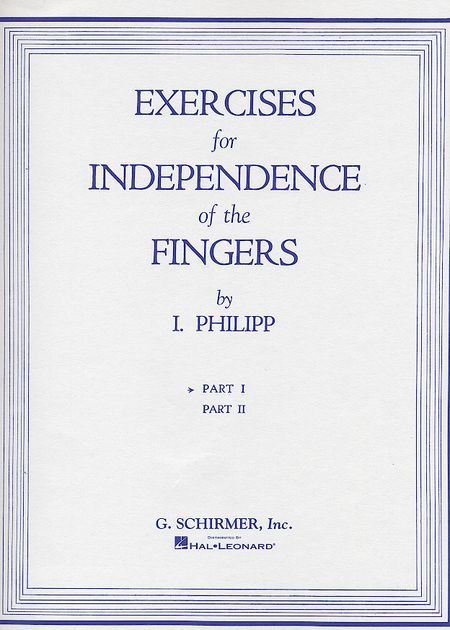
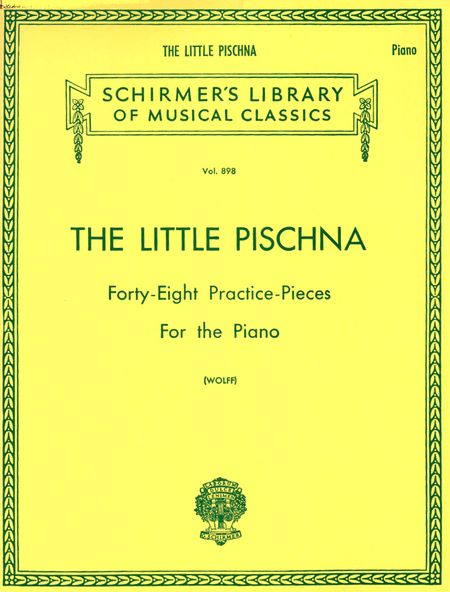
Exercises Once the daily routine has been completed, any pianist serious about improving his technique should devote at least one additional hour every day to doing some, all, or a combination of the exercises in the following books:
The most
valuable parts of Philipp’s book are the first five
“series” in Part I of the first volume (“part”) of his
book.
All three
volumes of the Liszt Technical Studies are
filled with wonderfully useful exercises. These
volumes are very expensive, but worth every penny.
After all, a couple hundred dollars is really a small
sum to trade for the ability to play as well as Franz
Liszt.
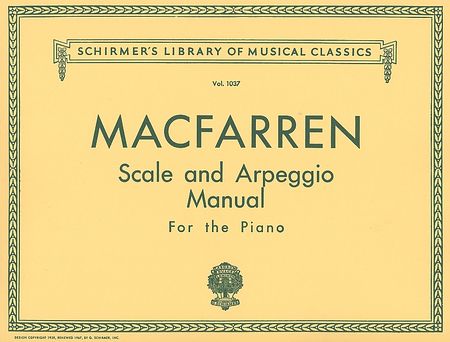
The best books
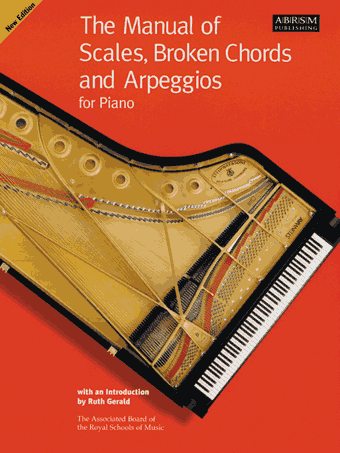
for scales and arpeggios are: Scale and Arpeggio Manual. by
Walter Macfarren. G. Schirmer. The Manual of Scales, Broken Chords and Arpeggios for Piano. The Associated Board of the Royal Schools of Music.
Use this book to
obtain the best fingering for scales, especially the
fingering for double thirds. Many different fingers
have been devised for double thirds, but I strongly
approve of the fingering provided in this book.
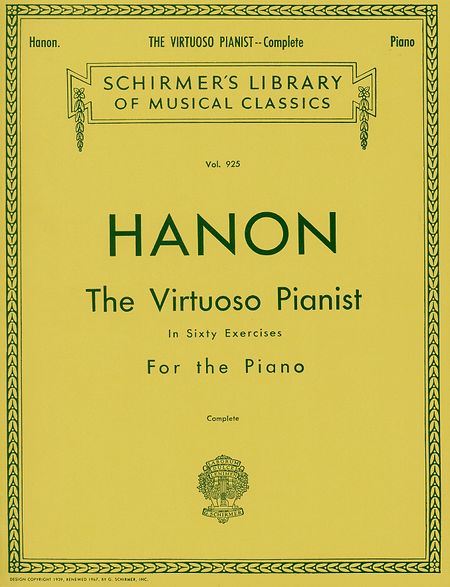
I am frequently asked about the value of Hanon’s The Virtuoso Pianist in Sixty Exercises. I think that it is an excellent book, especially for beginning and intermediate piano students. Book Three of Hanon’s opus is exceedingly useful. Nevertheless, for the advanced pianist, Hanon should be used as a supplement rather than substitute for any of the exercises listed above. Also, in my view, Hanon’s book would be more useful if each of the first 38 exercises had been transposed into all 12 keys.
There are many
other great books of technical exercises. Johannes
Brahms, for instance, published a useful volume.
Rafael Joseffy, Carl Tausig, and Alfred Cortot
published very interesting and valuable volumes as
well. Should I come across a book of technical
exercises as wonderful as Philipp, Pischna, and Liszt,
I will be sure to list it here. Nevertheless, what I
have listed here is more than sufficient to build a
world-class technique that will sustain the pianist
for a lifetime. Frederick Hodges  |